
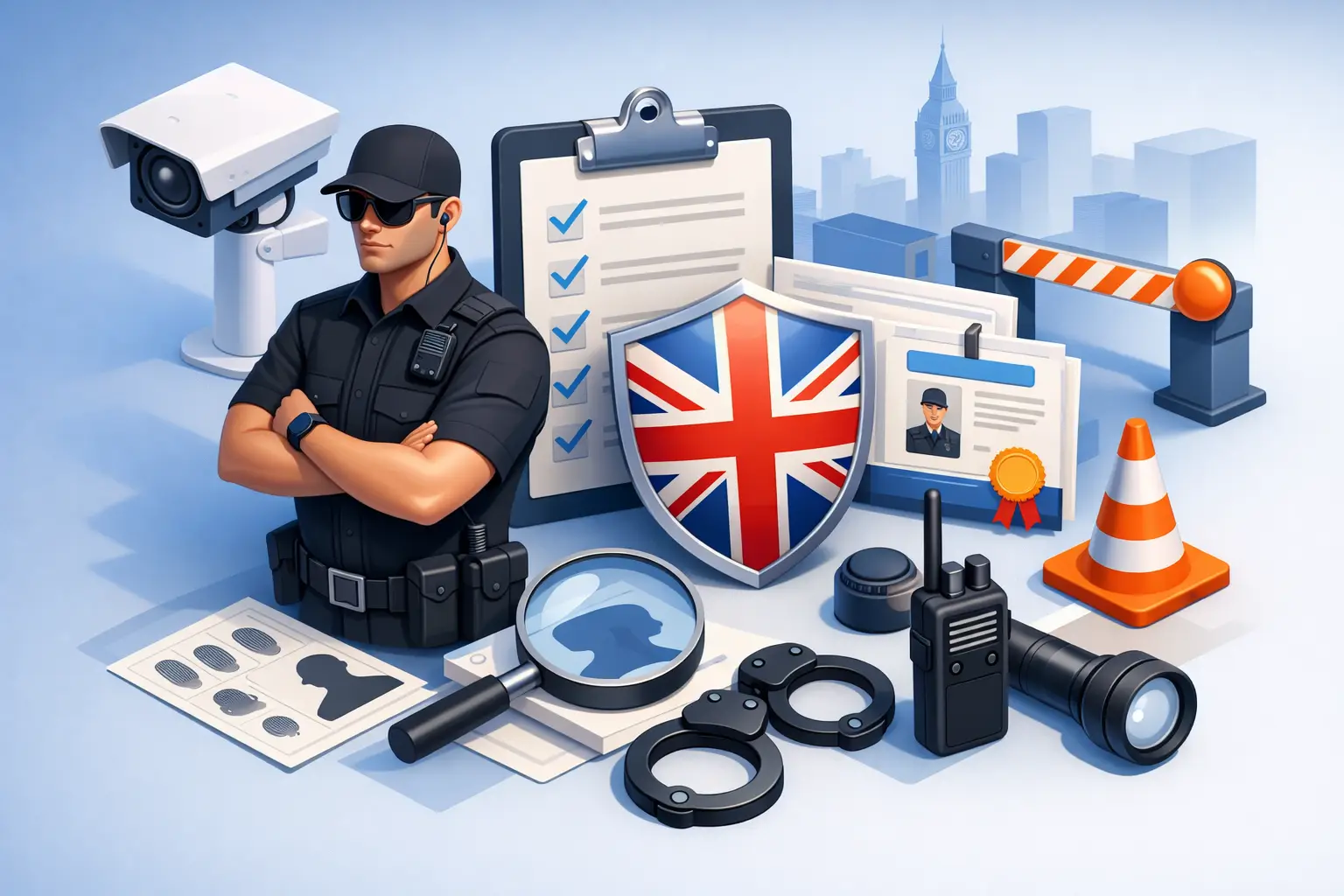
If you want to work in security, the biggest mistake is assuming you can apply first and sort the training later. In most cases, security guard qualifications UK employers expect are tied to SIA licensing, and without the right course and licence, you are unlikely to get far. The good news is that the route into the industry is clear, practical and much faster than many people think.
Security work can be a solid entry point into stable employment. It suits people who are calm under pressure, good with the public and ready to take responsibility. Whether you want to work in retail, offices, construction sites, warehouses or event venues, the starting point is understanding which qualification you actually need and what it allows you to do.
What security guard qualifications UK roles usually require
For most frontline security jobs in the UK, the essential requirement is an SIA licence. SIA stands for Security Industry Authority, the body that regulates private security licensing. To apply for an SIA licence, you usually need to complete an approved training course first.
If your goal is to work as a security officer guarding property, people or premises, the most direct route is the Security Guard course. This qualification is designed for roles such as retail security officer, site security guard, office reception security and gatehouse or warehouse security. It focuses on the practical knowledge needed for day-to-day work, not academic theory.
Some learners are unsure whether they need a Security Guard licence or a Door Supervisor licence. That matters because the two are not the same. A Security Guard licence covers guarding duties in places where there is no licensed alcohol venue element or door supervision role. A Door Supervisor licence is broader and can open up more job options, including bars, clubs, events and many static guarding roles as well. If you want flexibility, Door Supervisor training may be the better fit. If you know you only want non-door roles, Security Guard training can be the simpler route.
The basic eligibility rules
Before booking a course, it helps to know the minimum requirements. To work towards an SIA licence, you normally need to be at least 18 years old and have the right to work in the UK. You also need to pass identity and criminal record checks as part of the licence application.
You do not need a university degree, years of experience or perfect English. But you do need enough English to understand the training, follow instructions, complete the assessment and communicate safely at work. Security is a people-facing role. You may need to write incident reports, give directions, manage conflict or speak to emergency services, so clear communication matters.
There is also a practical point many people miss. Current licence-linked training standards include an Emergency First Aid at Work requirement for some SIA courses, including Door Supervisor. Depending on the course you choose and your existing certificates, you may need to complete first aid training before starting. That is one reason many learners choose a training provider that can help them arrange both in the right order.
What you learn on a Security Guard course
A proper course is built around real working situations. You will not just sit in a room memorising rules. Good training should help you understand what the job actually looks like and how to handle common problems with confidence.
You can expect to cover the main responsibilities of a security officer, including patrolling, access control, searching procedures, health and safety awareness, fire procedures, civil and criminal law basics, and dealing with incidents. Communication is a major part of the role, so conflict management and customer service also feature strongly.
That balance matters because security work is not only about spotting trouble. A lot of the job is prevention, observation and professional presence. In one shift you might be checking visitor access, monitoring a loading area, responding to a fire alarm and calming down a frustrated member of the public. Employers value guards who are alert, polite and reliable, not just physically present.
SIA licence training and assessment
The training course is only part of the process. After completing the course, you must pass the required assessments. These are designed to show that you understand the legal responsibilities, safety procedures and practical standards expected in licensed security work.
For many learners, the exam is the part they worry about most. In reality, the outcome often depends on the quality of teaching and how well the material is explained. Experienced trainers who use real examples from working environments can make a big difference. Clear teaching, practice questions and support in class usually matter more than trying to cram everything the night before.
Once you have passed, you can move on to your SIA licence application. The exact processing time can vary, so if you are aiming to start work quickly, it makes sense to plan ahead rather than wait until a job offer arrives.
Security Guard or Door Supervisor – which qualification is better?
This depends on the type of work you want. If you only plan to work in static guarding, retail or site-based security, the Security Guard qualification may be enough. It is targeted, relevant and often suits learners who want a straightforward route into the sector.
If you want wider job options, Door Supervisor training often gives you more flexibility. Many employers prefer it because it covers additional situations, including licensed venues and public-facing environments where conflict management is a bigger part of the role. It can also make sense if you are not yet sure which security setting suits you best.
There is a trade-off, though. The broader route can involve more content and, depending on your circumstances, an extra first aid step. That does not make it harder in a negative sense, but it does mean choosing the right course should be based on your job goals, not just the course title.
Beyond the licence – what employers really look for
Having the required qualification gets you into the running, but it is not the whole story. Employers also want people who arrive on time, follow procedure, stay calm and present themselves professionally. Security officers are trusted with safety, access and incident response. Reliability is not a bonus in this industry. It is part of the job.
A clean, professional manner matters too. In some roles you are the first person a visitor or customer sees. In others you may be the person staff turn to when something goes wrong. That means confidence, communication and judgement are often just as valuable as the certificate itself.
This is why hands-on training matters. Learners tend to do better when they practise realistic scenarios instead of only reading slides. Training that reflects real shifts, real incidents and real reporting standards helps you become job-ready faster.
Do you need extra qualifications after security guard training?
Sometimes yes. It depends on the role you want and the sector you enter. A CCTV qualification can help if you want monitoring room work. First aid can strengthen your CV and may be required for some positions. Health and safety awareness can also be useful, especially for site-based roles or construction-related environments.
For anyone thinking long term, security can lead into more specialised work. Some people start in guarding and move into CCTV operations, concierge security, corporate reception, key holding or supervisory roles. Others use it as a stable stepping stone while building experience in public-facing or safety-focused work.
That is one reason practical providers such as BrotherzGroup focus so heavily on employability. Fast certification is useful, but the real value is being trained in a way that prepares you to step into licensed work with confidence.
How long does it take to become qualified?
Compared with many regulated industries, security is relatively quick to enter. The course itself can usually be completed in a short period, and after passing the assessment you can apply for your SIA licence. The full timeline depends on course availability, whether you need first aid first, and how quickly your licence application is processed.
If speed matters, choose training that is structured clearly, delivered by experienced instructors and designed to keep you moving towards work rather than leaving you waiting around for results. For many learners, that is the difference between planning for a new job this month and pushing it back for another season.
Choosing the right training provider
Not all training feels the same from a learner’s point of view. A recognised qualification is essential, but support matters as well. You want a provider that explains the process clearly, teaches in plain English, prepares you properly for the assessment and gives you confidence rather than confusion.
Look for practical delivery, knowledgeable trainers and a course structure that is built around getting learners ready for real jobs. If the provider also offers quick results and support when things do not go to plan, that can remove a lot of stress from the process.
Security is one of those careers where the right start makes a real difference. Get the qualification right, understand the licence route, and you put yourself in a much stronger position for paid work. If you are serious about entering the industry, the best next step is simple: train properly, get licensed and start building experience that employers can trust.
Leave a Reply