
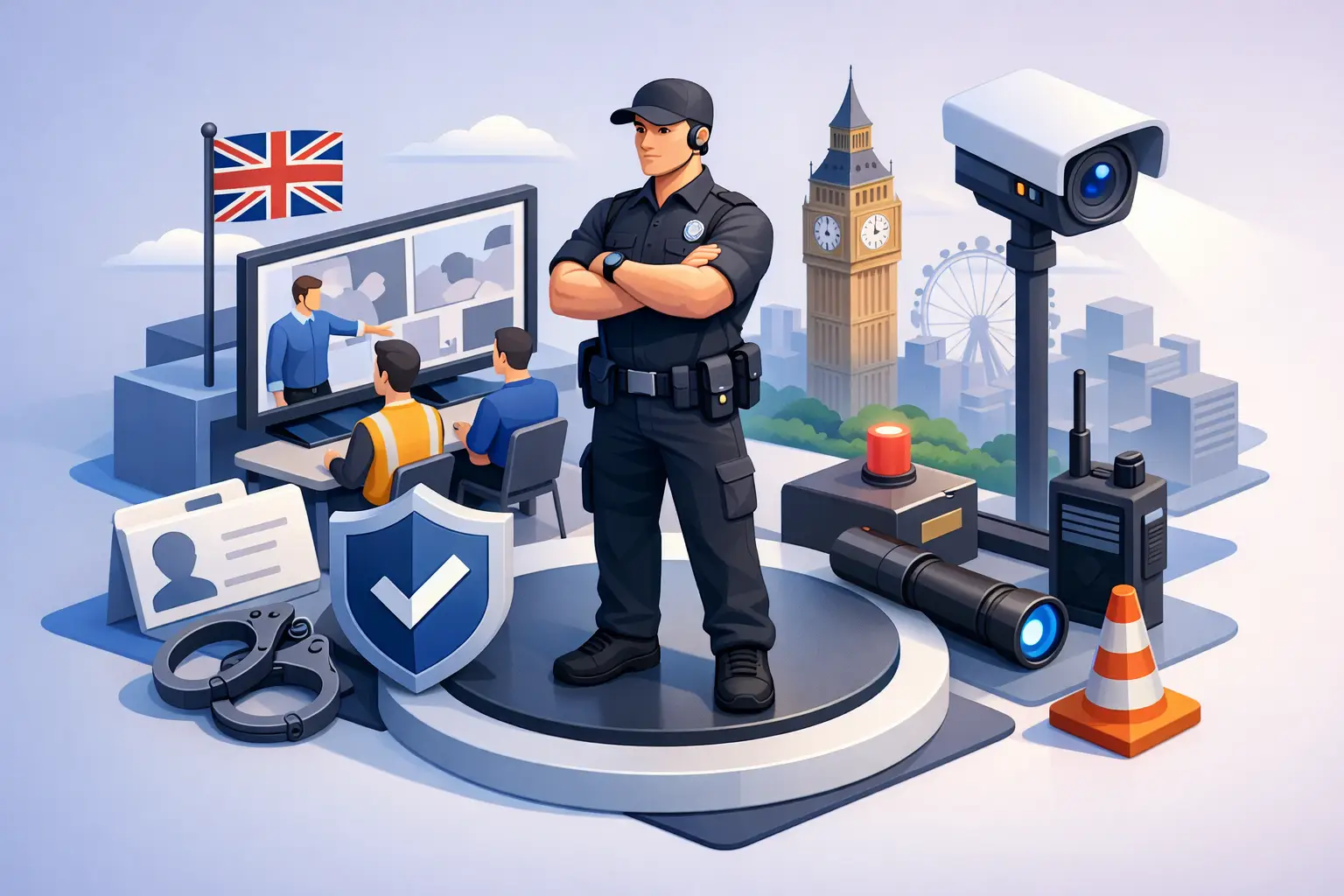
If you want to work as a door supervisor, security guard or CCTV operator, one question comes up straight away – what is SIA security training, and do you actually need it? In most cases, yes. If the role requires an SIA licence, you cannot legally start work without first completing the right training and passing the required assessments.
That is why SIA training matters. It is not just a classroom exercise or a box-ticking course. It is the recognised route into licensed private security work in the UK, and for many learners it is the first real step towards paid shifts, steady hours and a clear career path.
What is SIA security training?
SIA security training is the approved training you must complete before applying for certain Security Industry Authority licences. The SIA is the body that regulates many private security roles in the UK. Its job is to set standards, protect the public and make sure licensed security staff are trained to do the work properly.
In simple terms, the training teaches you the legal responsibilities, safety procedures and practical skills needed for frontline security roles. That includes dealing with conflict, protecting people, understanding the law, carrying out searches where appropriate, reporting incidents, and responding correctly in emergencies.
The exact content depends on the licence-linked course you choose. A Door Supervisor course is different from a CCTV Operator course, for example, because the jobs are different. But all approved SIA training is designed around one key outcome – helping you become job-ready for regulated security work.
Who needs SIA training?
You need SIA training if you want to apply for a frontline SIA licence in a role covered by regulation. This usually includes people planning to work in pubs, clubs, retail security, events, office buildings, construction sites, reception security and monitoring environments.
Common roles include door supervisors, security guards and public space surveillance CCTV operators. If you are changing careers, returning to work, or looking for a faster route into employment, these courses can be a practical way to qualify for roles with regular demand.
It does depend on the job. Some back-office or non-licensable roles may not need an SIA licence. But if you will be carrying out licensed activity on the front line, training is not optional.
The main types of SIA training courses
The most popular route is the Door Supervisor course. This is often chosen by learners who want broader job options because it can open the door to work in licensed venues, events, retail and corporate settings. It usually includes physical intervention training as well, which is required for the qualification.
Security Guarding training is another common option. This course is aimed at people who want to work in premises security, patrols, key holding support or site-based guarding where licensed premises work is not the focus.
CCTV Operator training is for learners who want to work with public space surveillance systems. This suits roles where observation, reporting and responsible monitoring are central to the job.
There are also Top-Up Refresher courses. These are for existing licence holders who need updated training to renew in line with current SIA requirements. This is especially important for those returning to the industry after time away or renewing after rule changes.
What do you learn on an SIA course?
A good course is built around real working situations, not just theory. You will usually cover the private security industry, the law and your responsibilities, health and safety, fire awareness, emergency procedures, communication, customer service and conflict management.
On a Door Supervisor course, you will also learn about searching, dealing with incidents at venues, and physical intervention. That part needs careful teaching because the aim is not to encourage force – it is to help you stay lawful, safe and proportionate when a situation becomes difficult.
First aid is now part of the picture too. For many licence-linked courses, learners need an Emergency First Aid at Work qualification or equivalent before starting the SIA training. This catches some people out, so it is worth checking early rather than leaving it until the last minute.
The strongest training providers focus on practical scenarios. That matters because employers do not just want a certificate. They want staff who can stay calm, communicate clearly, spot risk and act professionally under pressure.
What happens after the training?
Once you complete the course and pass the assessments, you receive your qualification certificate. You then use that qualification to apply for your SIA licence. The training itself does not give you the licence automatically – it is the required step before the licence application.
You will usually need to prove your identity and right to work, complete the application process and pay the SIA licence fee. Processing times can vary, so if you are aiming to start work quickly, it helps to prepare your documents properly from the start.
This is where speed matters. Fast certification, clear guidance and instant exam results can make a real difference when you are trying to move into work without delays.
How long does SIA security training take?
Most courses are completed over a few days, depending on the qualification. Door Supervisor training typically takes longer than Security Guarding because it covers more content, including physical intervention. CCTV courses and Top-Up Refresher options can also vary.
The main point is that SIA training is relatively quick compared with many other vocational routes. For learners who want a recognised qualification without spending months in study, that is a major advantage.
Of course, quick does not mean easy. You still need to attend, engage, revise and pass the assessments. But with the right trainer support, many learners find the process manageable, even if they have been out of education for years.
How much does it cost?
Prices vary by course type, location and whether first aid is included. A cheaper course is not always better value if support is poor, the timetable is unclear or you are left chasing results afterwards.
What matters more is whether the provider gives you approved training, experienced instructors and a realistic chance of passing first time. For many learners, a free resit guarantee adds reassurance because it reduces the risk if an exam does not go to plan.
It is also worth thinking beyond the course fee. This training is linked to earning potential. If the qualification helps you access licensed shifts, event work or longer-term security roles, the return can be much stronger than the upfront cost suggests.
What makes a good SIA training provider?
Not all training experiences feel the same. Some providers deliver the bare minimum. Others focus on helping you understand the job, not just pass a test.
Look for clear course information, accredited training, practical teaching, support with questions, and trainers who understand the realities of frontline security work. Learners often do better when training is explained in straightforward language without unnecessary jargon.
That is especially important if English is your second language, if you are new to the UK job market, or if you simply want direct teaching that respects your time. A provider such as BrotherzGroup builds around employability, which means the training is not treated as an academic exercise. The goal is to get you qualified, confident and ready to step into real roles.
Is SIA security training worth it?
For most people aiming for licensed security work, yes – because it is the gateway into the job. Without it, you cannot move forward with the licence application. With it, you can start applying for roles that need recognised, regulated qualifications.
It is also worth it because the skills are practical. You are learning how to deal with people, reduce risk, follow procedure and work responsibly in public-facing settings. Those are useful abilities across a wide range of environments, from events and hospitality to retail and site security.
That said, the right course depends on your goal. If you want venue work and broader flexibility, Door Supervisor may be the better route. If you prefer lower-profile guarding work, Security Guarding might fit better. If you are already licensed and need to renew, a Top-Up course is likely the answer. The best choice is the one that matches the jobs you actually want.
What is SIA security training really preparing you for?
At its best, SIA security training prepares you for more than an exam room. It prepares you to be trusted with responsibility. Security staff are often the first people to spot trouble, reassure the public, protect property and support safety on site.
That is why proper training matters. The certificate gets you through the formal requirement, but the real value is in building confidence before your first shift. When training is practical, well taught and linked to real employment, you do not just finish with a qualification. You finish with a clearer route into work and a better idea of how to succeed once you get there.
If you are considering security as your next move, start by choosing the licence route that matches your target role, then train with a provider that treats your course as the beginning of your job journey, not the end of it.
Leave a Reply