
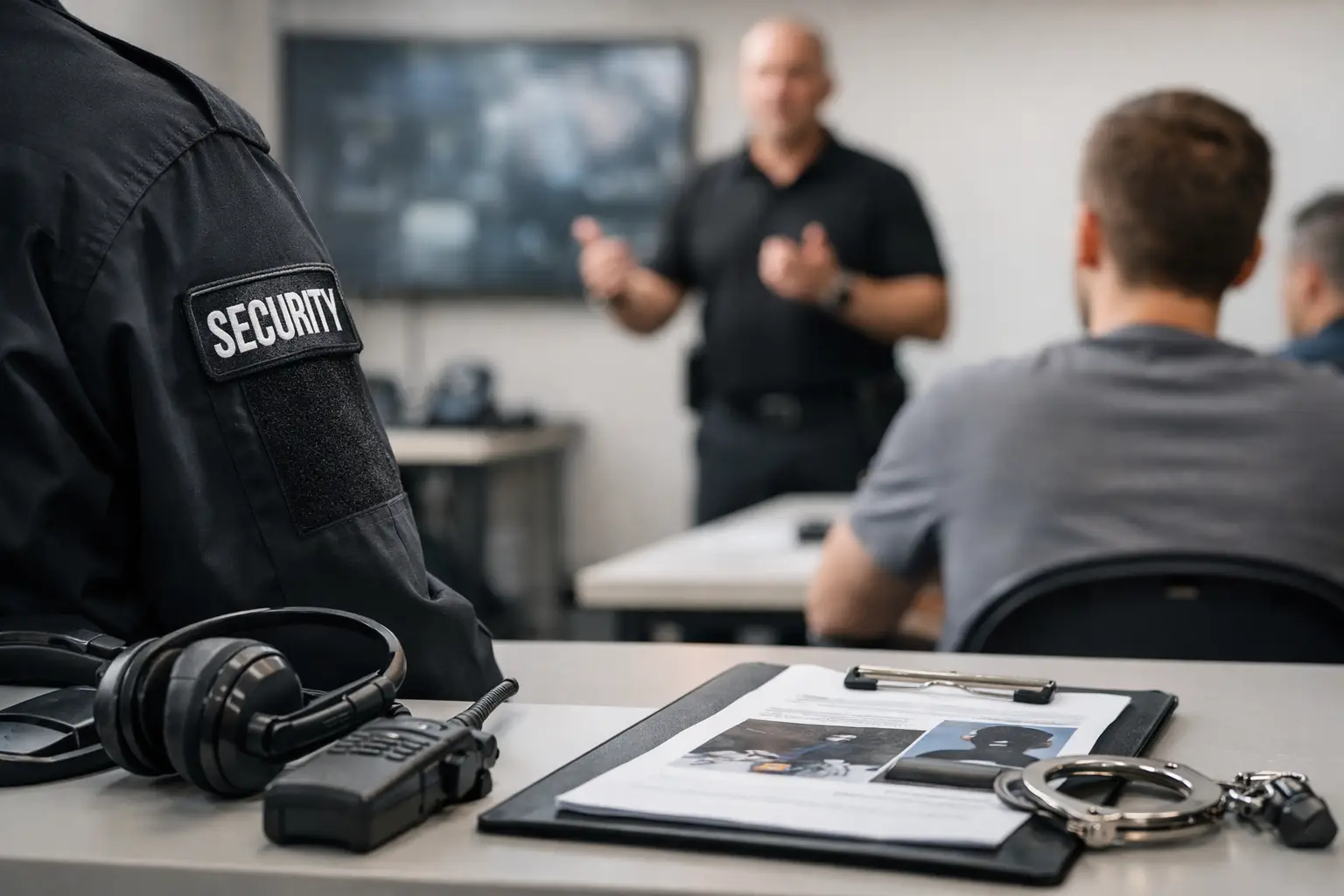
Most people asking how long is door supervisor course training are not looking for a long academic commitment. They want to know when they can complete the qualification, apply for an SIA licence and start going for paid security work. For most learners, a Door Supervisor course takes six days to complete.
That six-day answer is useful, but it is not the whole picture. Your route into work also includes meeting the first aid requirement, passing the course assessments, receiving your qualification and applying for your licence. Knowing what happens at each stage helps you plan properly and avoid delays.
How long is a Door Supervisor course?
A standard SIA Door Supervisor course is normally delivered over six training days. Providers may run those days consecutively over one week, spread them across weekends, or use an evening timetable. The total calendar time therefore depends on the course schedule, but the classroom and practical training itself is usually six days.
This is a regulated qualification, so the course is not something you can rush through in one afternoon. You need enough guided learning time to cover the required units, take part in practical activities and complete assessments. A well-run course gives you time to understand the job, rather than simply memorising answers for an exam.
For learners who need a quick route into security, six days is a realistic and manageable commitment. It is also why it helps to book a course date that you can attend in full. Missing training can delay your assessment and, ultimately, your licence application.
Why the course takes six days
Door supervisors deal with the public in busy, sometimes challenging environments. The qualification needs to prepare you for more than checking ID at a venue entrance. You may work at licensed premises, events, retail sites, corporate buildings or front-of-house locations where communication, judgement and safety matter every day.
The course usually covers the knowledge and practical skills needed for this responsibility. You will learn about the private security industry, working as a door supervisor, managing conflict and physical intervention. The physical intervention element is practical and must be completed safely under the guidance of an experienced trainer.
Six days gives learners space to ask questions, practise scenarios and build confidence. This is particularly valuable if you are changing careers, have not studied for a while, or are new to UK security work.
What happens during Door Supervisor training?
The timetable varies slightly between providers, but the learning follows a clear job-focused route. Early sessions usually cover the role of the security officer, legal responsibilities, customer service, reporting, searching, access control and how to protect people and property.
You will then spend time on conflict management. This includes recognising signs that a situation may escalate, communicating professionally, keeping a safe distance and choosing appropriate ways to calm a situation. Good security work is often about preventing problems before they become serious.
The practical physical intervention sessions are equally important. You will be taught approved techniques and the principles behind them, including reasonable force, personal safety and aftercare. These sessions are not about acting aggressively. They are about responding lawfully, proportionately and safely when there is no better option.
At BrotherzGroup, the focus is on practical instruction that helps learners feel job-ready, not overwhelmed by theory. Learning with trainers who understand real security environments can make the difference between simply gaining a certificate and feeling prepared for your first shift.
How long do the assessments take?
Assessments are built into the course period, so you will normally complete them during or at the end of your six days of training. They can include multiple-choice exams as well as practical observation for physical intervention.
You should not assume the assessment is difficult because it is regulated, but you should take it seriously. Attend every session, listen carefully during practical demonstrations and ask for clarification if a topic is unclear. Your trainer is there to help you understand what you are being assessed on.
Some training providers offer instant exam results for applicable assessments, which can remove some uncertainty at the end of the course. Your official qualification certificate still follows after the awarding process, so there is a difference between knowing your result and having the certificate ready for an SIA application.
If you do not pass an assessment first time, check the provider’s resit policy before booking. A free exam resit guarantee can provide useful reassurance, especially when your priority is getting qualified and into work without unexpected extra costs.
Do you need first aid before the course?
Yes. Before starting Door Supervisor training, you need a recognised first aid qualification, such as Emergency First Aid at Work or an accepted equivalent. It must meet the SIA’s requirements and remain valid for the required period from the start of your security course.
This can affect how long your overall journey takes. If you already hold an acceptable, in-date first aid certificate, you can move straight to booking your six-day Door Supervisor course. If you do not, allow an extra day to complete first aid training first.
It is worth checking your certificate before you enrol. An expired certificate, or one that does not meet the required standard, could stop you from starting the course as planned. A good training provider will explain the requirement clearly and help you choose the right option.
From course completion to SIA licence
Finishing the course does not mean you can work as a licensed door supervisor immediately. Once your qualification certificate is available, you need to submit an application for an SIA Door Supervisor licence. The SIA then carries out its own checks before making a decision.
The licence application stage can take longer than the training itself. Processing times vary depending on individual circumstances, identity checks and criminal record checks. For that reason, avoid promising an employer a start date until your licence has been granted.
A sensible timeline is to treat the six-day course as the first major step, then allow additional time for certification and licensing. If you are planning a career move, book your training early rather than waiting until a job advert appears.
Is the Door Supervisor course worth six days?
For many people, yes. The Door Supervisor licence offers wider job options than a Security Guard licence because it can support work in roles that include licensed premises. Depending on the employer and site, opportunities can include venue security, event work, retail security, corporate reception, concierge-style duties and front-of-house security.
The job is not suitable for everyone. Shifts may include evenings, weekends and public holidays, and you need to be calm with people under pressure. But for dependable, professional people who want a regulated route into employment, it can be a strong starting point with room to progress into supervision, CCTV, close protection support roles or other security specialisms.
Your experience, location, shift pattern and employer all influence pay. The most useful way to view the qualification is as an entry point to licensed work, with practical skills that employers expect you to use from day one.
Plan your course around your work goal
If you already have valid first aid, plan for six days of Door Supervisor training, then the time needed for your certificate and SIA application. If you need first aid too, add that extra day before the security course. Choosing a course with clear assessment support, practical coaching and a resit guarantee can help keep your plan on track.
The fastest route is not about cutting corners. It is about completing the right qualification properly, passing with confidence and being ready to show employers that you understand the responsibilities behind the badge. Book a date you can commit to, arrive prepared and use the training as the first step towards a security role you can grow in.
Leave a Reply