
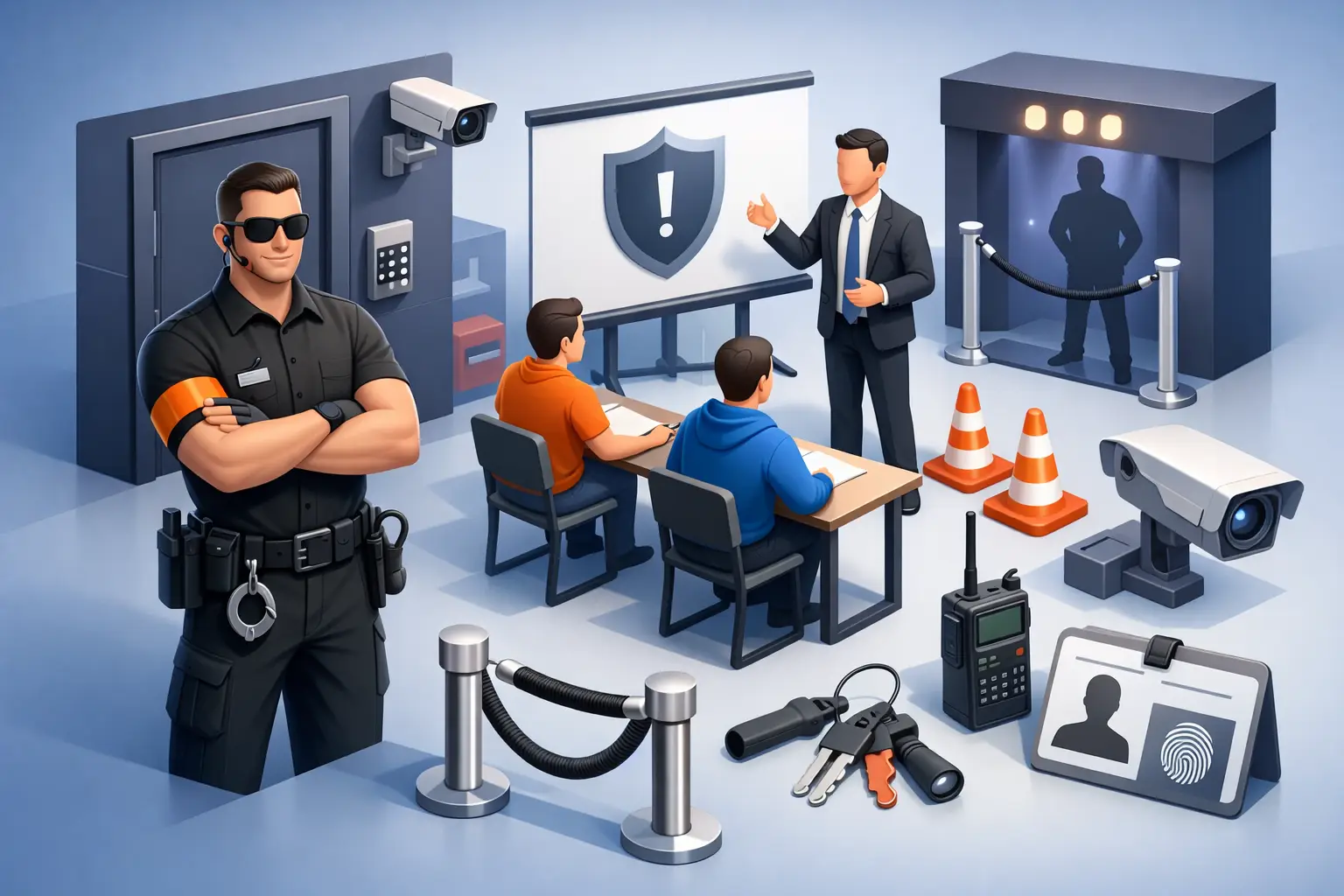
If you want to work security on licensed premises, at events, in retail or on reception, one question comes up straight away: what is SIA Door Supervisor course, and do you need it? In simple terms, it is the training that prepares you for one of the most widely recognised SIA licence routes in the UK. It gives you the knowledge and practical skills needed to work in frontline security roles where dealing with the public, managing conflict and keeping people safe are part of the job.
For many learners, this course is the quickest practical step into paid security work. It is not about classroom theory for the sake of it. It is about getting qualified, understanding your legal responsibilities and becoming job-ready for real sites and real employers.
What is SIA Door Supervisor course and what does it lead to?
The SIA Door Supervisor course is a regulated training qualification designed for people who want to apply for an SIA Door Supervisor licence. The Security Industry Authority is the body that regulates private security licensing in the UK, and this licence is required for many frontline roles.
A Door Supervisor licence can open more doors than many people expect. It is commonly linked with pub and club security, but it is also useful for work in retail security, corporate security, events, front-of-house guarding and other customer-facing roles. In practice, it is often chosen by people who want broader job options than a basic Security Guard qualification offers.
That broader access matters. If your goal is to get into work quickly, the type of badge you train for can affect the range of shifts you can apply for. A Door Supervisor course is often the stronger option for learners who want flexibility.
What do you learn on the course?
The course covers more than standing on a door. Good training is built around the situations security staff face every day: dealing with conflict, protecting people, understanding the law and responding properly under pressure.
You will usually study the main principles of working in the private security industry, including the standards expected from licensed staff. That means understanding roles and responsibilities, the law around searching, recording incidents, protecting vulnerable people and knowing when your actions must stay within legal limits.
A large part of the course focuses on conflict management. This is one of the most important areas because many security jobs involve speaking to members of the public, refusing entry, calming tense situations and preventing incidents from escalating. Employers value staff who can handle problems professionally before they turn physical.
There is also physical intervention training. This part teaches safe and lawful ways to disengage, reduce harm and protect yourself and others if a situation becomes serious. It is practical, controlled training, and it must be delivered correctly because it deals with safety, legality and public protection.
In many cases, learners will also cover terror threat awareness and safety procedures linked to crowded places and public-facing venues. That reflects the reality of modern security work. A licence holder may be expected to spot risks early and respond in a calm, professional way.
Who needs the SIA Door Supervisor course?
If you plan to work in licensed security roles where you may need to guard premises, control access or deal directly with the public, this course is often the right route. It suits people aiming for jobs such as door supervisor, security officer, event security operative, retail security officer and concierge or reception-based security roles.
It also suits job switchers who want a practical qualification without spending months in study. Many learners come from hospitality, warehousing, customer service, transport or general labouring and want a clearer route into regulated work. Security appeals because there is steady demand, shift flexibility and a visible path to higher-responsibility roles.
That said, it depends on the work you want. If you only plan to carry out non-door security duties in limited settings, a Security Guard course may sometimes be enough. But for people who want the widest range of frontline opportunities, the Door Supervisor route is usually the more versatile choice.
Entry requirements and what to expect before you book
Before starting, you need to meet basic eligibility requirements. You must usually be aged 18 or over and have the right level of English to read course materials, understand instructions and complete the assessments. Security work depends on clear communication, so this is a practical requirement, not a box-ticking exercise.
You will also need a valid Emergency First Aid at Work qualification, or an equivalent accepted first aid certificate, before the Door Supervisor qualification can be completed. Some learners already have this. Others book it alongside their security training so everything is sorted in the right order.
The practical side matters too. Physical intervention training involves movement, technique and participation. You do not need to be an athlete, but you should be prepared to take part properly and follow trainer guidance.
How long does the course take?
The exact timetable can vary by provider, but the SIA Door Supervisor course is normally delivered over several days rather than weeks or months. That is one reason it attracts learners who want to move into work fast.
A shorter course does not mean easy. It is intensive, and you need to turn up focused, ready to learn and ready to revise. The best training providers keep it practical and structured so learners understand not only what is in the workbook, but how it applies on site.
For many people, speed matters because they are trying to secure work quickly. Fast delivery only helps if the teaching is solid, the trainers know the industry and the exams are handled efficiently.
How is the course assessed?
Assessment usually includes a mix of multiple-choice exams and practical observation. The knowledge-based units test your understanding of security procedures, law, responsibilities and conflict management. The practical element checks that you can carry out physical intervention techniques safely and correctly.
This is where proper teaching makes a real difference. Learners are not just trying to memorise answers. They need to understand why certain actions are lawful, why communication matters and how professional behaviour protects both the public and the licence holder.
Instant or fast exam results can be especially helpful here because they reduce delays between training, passing and moving on to the next step of your licence application.
What happens after you pass?
Once you have passed the course, you can move on to apply for your SIA Door Supervisor licence, provided you meet the SIA’s other requirements. The training qualification itself is not the licence, but it is a key part of becoming eligible for one.
After that, you can start applying for suitable roles. This is where learners often begin to see the value of choosing Door Supervisor training in the first place. The licence is recognised across a wide range of settings, and that can make job hunting more straightforward, especially if you are open to evenings, weekends or event work.
Some learners use it as a starting point and then build from there. They may move into CCTV, supervisory roles, site-based security, keyholding or other specialist pathways. Security is one of those sectors where getting the first recognised qualification often changes what becomes possible next.
Is the course difficult?
For most learners, the course is manageable if they attend properly, listen to the trainer and do a bit of revision. It can feel challenging if you are new to the industry or have been out of learning for a while, but it is designed for working adults, not full-time academics.
The main challenge is usually confidence, not ability. People worry about exams, legal terms or the physical intervention unit. In reality, strong trainers break the content down clearly, use real examples and give learners the support they need to understand what the job involves.
That is why choosing the right provider matters. A course should not just get you through an assessment. It should leave you feeling prepared for the workplace.
Why this qualification matters for employability
When employers recruit for frontline security roles, they are not only looking for a badge. They want people who can communicate well, stay calm, follow procedure and represent a venue or business professionally. The SIA Door Supervisor course is the starting point because it builds those expectations into the training.
For job seekers, that makes the qualification practical rather than theoretical. You are learning the rules, but you are also learning how the job works in real life. That is especially important in security, where one poor decision can affect safety, reputation and legal compliance.
Providers such as BrotherzGroup focus on job-ready training for exactly this reason. Learners want recognised qualifications, fast turnaround and support that helps them move towards paid work, not just pass a classroom session.
Is it worth doing?
If your aim is to enter private security with wider job options, yes, it often is. The course gives you a regulated route into an industry that continues to need trained staff across venues, shops, offices, transport hubs and events. It is not a guarantee of employment, and your success still depends on presentation, reliability and local vacancies. But it is a serious step towards licensed work.
The best way to look at it is this: the course is your foundation. It gives you the legal knowledge, practical skills and recognised qualification needed to move forward with confidence. If you want a route into security that is respected by employers and linked to real opportunities, it is one of the clearest places to start.
A good course should leave you with more than a pass result. It should leave you feeling ready to step onto a site, handle responsibility and start building a proper career.
Leave a Reply