
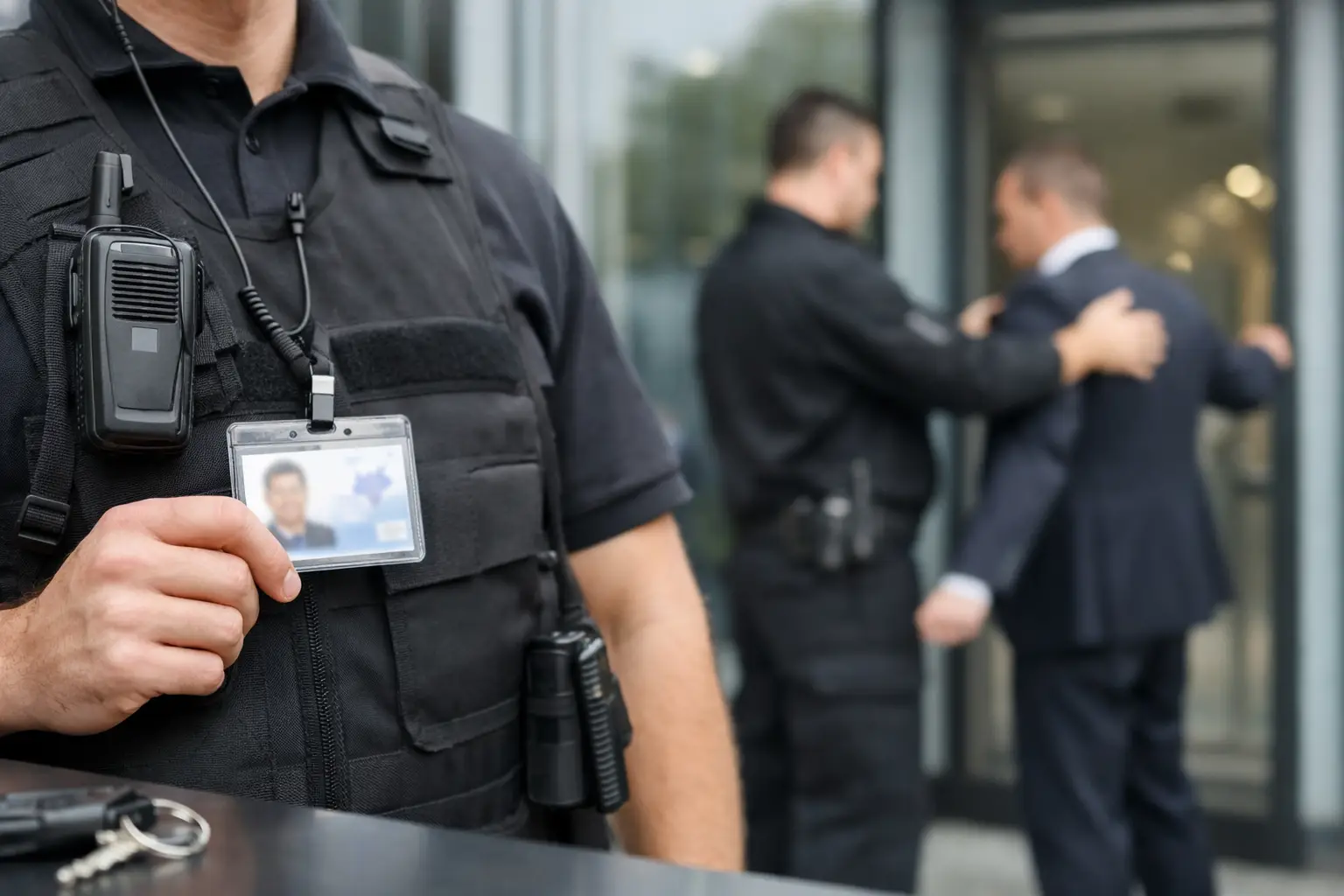
A security employer may be ready to offer you shifts, but most frontline roles cannot start until your SIA licence is in place. Knowing how to get an SIA licence means separating the qualification you need from the licence application itself, then completing both in the right order. Get that right and you can move towards paid work in door supervision, retail security, events, guarding or CCTV operations with confidence.
What an SIA licence allows you to do
The Security Industry Authority (SIA) regulates much of the private security industry in Great Britain. An SIA licence proves that you have met the required training, identity and criminality-check standards for a specific type of frontline security work.
Your licence must match the job you intend to do. A Door Supervisor licence is the most flexible option for many new entrants. It can lead to work at licensed venues, events, hotels, corporate sites and retail locations, and it also covers the activities of a Security Guard licence. A Security Guard licence is suitable for guarding roles that do not involve licensed premises, such as offices, warehouses and construction sites.
If you want to monitor cameras, you will normally need a Public Space Surveillance CCTV licence. This is a separate route, designed for control-room and CCTV operator work. There are also licences for specialist activities, but most people entering the sector start with Door Supervision, Security Guarding or CCTV.
A course certificate is not your SIA licence. It is the recognised qualification that allows you to apply for one. You must complete the full application and receive approval before working in a licensable role.
How to get an SIA licence step by step
1. Choose the licence route that fits your job goal
Choose based on the work you genuinely want to do, rather than simply selecting the shortest-looking course. Door Supervision often creates the broadest range of job options, particularly for people interested in nightlife, events and front-of-house security. It also includes practical learning around physical intervention.
Security Guarding can be the better fit if you prefer static guarding, access control, patrols and site-based work. CCTV is ideal if you are comfortable working in a monitoring environment, recording incidents accurately and following procedures under pressure.
Employers may advertise for a particular licence, so check local vacancies before booking. The right qualification helps you apply for relevant roles immediately after your licence is granted.
2. Check you meet the basic requirements
Before paying for training, make sure you can meet the SIA’s core conditions. You must be at least 18 years old and have the right to work in the UK. You also need to be able to provide acceptable identity documents and complete the SIA’s criminal record checks.
A previous conviction does not always mean you cannot get a licence. The SIA considers the nature of the offence, when it happened and the outcome. It is sensible to be honest from the start. Giving inaccurate information can cause more difficulty than explaining your circumstances properly.
For Door Supervisor and Security Guard training, you must usually hold a valid Emergency First Aid at Work qualification, or an accepted equivalent, before starting the licence-linked course. Check this with your training provider before booking. CCTV learners may have different entry requirements, so always confirm the course details.
3. Complete an approved SIA qualification
The training course is where you build the knowledge and practical skills employers expect. It covers areas such as working within the law, communication, conflict management, reporting incidents, searching procedures, emergency response and protecting the public.
Door Supervisor training also includes physical intervention. This is practical, controlled training, not a lesson in fighting. You learn how to reduce risk, use communication first and act only where necessary and lawful. Good trainers use realistic scenarios so you understand how procedures apply during a difficult shift.
Do not choose a provider on price alone. A very cheap course can become costly if it has unclear schedules, poor support or delays with certification. Look for recognised training, experienced instructors, clear attendance requirements and support if you need to retake an assessment. BrotherzGroup provides practical SIA-linked training for learners who want recognised qualifications and a direct route into security work.
4. Pass your assessments and receive your certificate
You must attend the required training and pass the assessments for your qualification. Some assessments are multiple-choice exams, while others test practical understanding through observations or scenarios. Take the course seriously, even if you have experience in customer service, hospitality or construction. Security work carries legal responsibilities, and employers value officers who can write clear reports, speak professionally and stay calm.
Once you have passed, your qualification certificate must be available for the SIA application. Training providers can often give prompt guidance on results and next steps, but do not assume that passing an exam means your licence has been issued.
5. Create your online SIA application
You apply for a frontline licence through the SIA’s online application process. You will need your personal details, qualification information, addresses and identity evidence. Take your time when entering dates, names and addresses. Small differences between your documents and your application can lead to avoidable delays.
The SIA will ask you to complete identity verification as part of the process. Depending on your circumstances, this may involve a post office identity check or another approved method. You will also pay the licence application fee. At the time of applying, check the current fee directly with the SIA, as charges can change.
Your application includes criminal record checks. If you have spent significant time living outside the UK, you may be asked for overseas criminal record documentation as well. This can take longer to obtain, so start early if it applies to you.
6. Wait for SIA checks and keep an eye on your application
The SIA reviews your qualification, identity and criminality information before making a decision. Processing times vary. Straightforward applications may move faster than those requiring additional documents or further checks, so avoid promising an employer a fixed start date until your licence status is confirmed.
Check your online account and messages regularly. If the SIA asks for information, respond promptly and accurately. Once granted, your frontline licence is normally valid for three years, provided you continue to meet the requirements.
How long does it take to get an SIA licence?
The full timeline depends on the course you choose, whether you already have first aid, how quickly your certificate is issued and the time needed for SIA checks. The training itself may take several days, while the application stage can take longer. A clean, complete application with matching documents is the best way to prevent unnecessary hold-ups.
If you need work quickly, plan backwards from your target date. Book the correct course, arrange first aid if required, gather your identity documents and leave time for the licence decision. Fast exam results are useful, but the SIA’s checks are still a separate stage that nobody can skip.
Common mistakes that slow down new security workers
The most common mistake is booking the wrong course. For example, a Security Guard licence will not let you perform door supervision at a licensed venue. Another is forgetting the first aid requirement before a Door Supervisor or Security Guard course.
Document errors are also common. Use your full legal name consistently, check your address history carefully and make sure your identification is valid. If your name has changed, prepare the supporting evidence before you apply.
Finally, do not work in a role that requires an SIA licence until it has been granted. Employers have responsibilities too, and working without the correct licence can affect both you and the business.
Turn your licence into paid work
An SIA licence opens the door, but employers still look for reliability, presentation and communication. Build a simple CV that lists your licence type, training completion, first aid qualification and any relevant experience. Customer service, hospitality, warehouse, reception and site work can all show useful transferable skills.
Be realistic about the first role. Event shifts may suit someone looking for flexible hours, while retail and corporate guarding can offer a more regular routine. Door supervision can involve late nights and challenging behaviour; CCTV work may require long periods of concentration. The best role depends on the hours you can work, your confidence with the public and the type of environment you prefer.
Start with the licence route that matches the work you want, complete your training properly and make your application accurate the first time. That gives you more than a certificate – it gives you a credible, job-ready starting point in security.
Leave a Reply