
A missed shift can cost money. A missed qualification can cost the job altogether. For many learners, an emergency first aid at work course is not just a useful extra – it is the certificate that helps you meet site, employer or licensing requirements and start work with confidence.
If you are applying for security roles, frontline site work or other practical jobs, first aid training shows employers you can respond properly under pressure. It also gives you a recognised qualification that can support wider training routes. In some cases, it is a direct requirement. In others, it gives you a stronger position when employers compare candidates with similar experience.
What is an emergency first aid at work course?
An emergency first aid at work course is a one-day qualification designed to give learners the skills to deal with urgent workplace incidents until professional help arrives. It focuses on immediate action, clear decision-making and practical response.
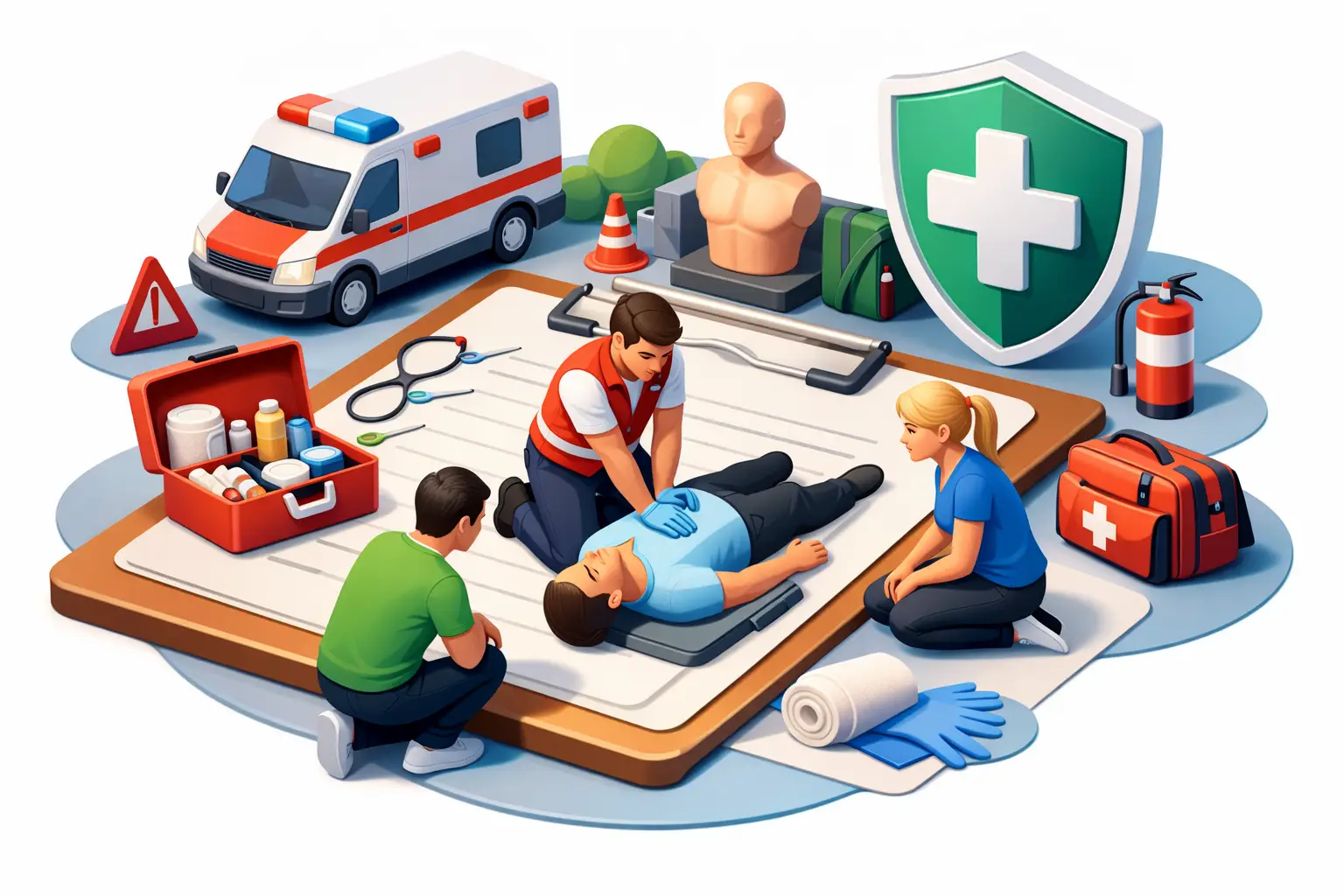
This is not a theory-heavy classroom subject. A good course is built around real workplace situations. You learn how to assess an incident, keep yourself and others safe, and provide basic but essential first aid. That usually includes dealing with an unresponsive casualty, CPR, use of an AED, choking, bleeding, shock and minor injuries.
For people moving into security, construction support roles or other public-facing work, that practical focus matters. You are not training to become a paramedic. You are training to stay calm, act correctly and protect life in the first critical minutes.
Who should take an emergency first aid at work course?
The short answer is that it depends on your job, your employer and the environment where you will be working.
For many learners, this course is a smart choice if you want to enter a regulated or risk-aware sector quickly. Security staff, stewards, site workers, warehouse staff, reception teams and supervisors often benefit from having first aid knowledge, even where it is not the main part of the role. If you are working with the public, around physical risk, or in settings where help may not be immediate, the qualification becomes even more valuable.
It is also common for learners to take this course alongside other employment-focused training. For example, some security pathways require a valid first aid qualification before you can complete licence-linked training. That means getting the certificate sorted early can save delays later.
For employers, the course helps meet workplace safety responsibilities. For learners, it improves employability. Those two things often go together.
What you learn on the course
The value of the course is in its practical outcomes. By the end, you should know how to spot a genuine emergency, what action to take first and when to call for more help.
Most emergency first aid at work course programmes cover the role of a first aider, incident assessment, CPR, recovery position, choking response, managing external bleeding, dealing with shock and handling minor injuries such as cuts, grazes and burns. You may also cover seizure response and basic recording or reporting requirements, depending on the provider.
What makes one course better than another is not usually the topic list. It is how the training is delivered. Learners tend to do better when trainers explain things clearly, demonstrate properly and use realistic scenarios instead of rushing through slides. If your goal is to become job-ready fast, hands-on practice matters far more than jargon.
How long does the qualification take?
In most cases, the course is completed in one day. That is one reason it is so popular with adult learners who want a recognised certificate without weeks out of work or long study periods.
A one-day format suits people who are balancing shifts, childcare, job searching or other training. It gives you a quick route into compliance without overcomplicating the process. That said, quick should not mean rushed. You still need enough trainer support, practical assessment time and a clear explanation of what you are doing.
The qualification is usually valid for three years, although it is sensible to refresh practical knowledge before then if you are regularly working in environments where incidents are more likely.
Is it enough for your job?
This is where people sometimes get confused. An emergency first aid at work course is a strong entry-level qualification, but it is not always the right course for every workplace.
Some employers need a fuller First Aid at Work qualification because of higher workplace risk, larger teams or specific legal assessments. If you are self-funding your training, it is worth checking exactly what your employer, site manager or course progression route requires before you book.
That does not reduce the value of the one-day course. In many settings, it is the correct level. It is especially useful where learners need a recognised first aid certificate quickly for work access, compliance or progression into other training. The key is matching the qualification to the job, not simply choosing the shortest option because it sounds easier.
Why this course matters for security and frontline roles
Security work is built around responsibility. You may be dealing with crowds, conflict, accidents, slips, intoxication, medical episodes or members of the public who need urgent help before emergency services arrive. In those moments, confidence and basic first aid knowledge can make a real difference.
Employers notice that. A candidate with relevant, in-date training often stands out because they look more prepared for the realities of the role. The same applies to site-based and customer-facing work. First aid is part of the wider picture of being reliable, compliant and ready to handle pressure.
For learners aiming to move quickly into paid work, this course also supports momentum. Rather than waiting until a vacancy appears and then scrambling to meet the requirement, you can get qualified in advance and apply with fewer gaps in your profile.
What to look for in an emergency first aid at work course provider
Not every training provider offers the same experience. The certificate title may look similar, but the quality of delivery can vary a lot.
Look for a provider that delivers accredited training, uses experienced instructors and keeps the teaching practical. Clear communication matters too. You should know what the course includes, how long it takes, how assessment works and when you can expect your results or certificate.
For many learners, speed is a deciding factor. Fast certification helps when you are trying to secure work without delays. Support matters just as much. If English is not your first language, if you have been out of education for years, or if you simply want trainers who explain things properly, a supportive training environment makes the whole process easier.
This is one reason providers such as BrotherzGroup appeal to employment-focused learners. The training is built around recognised qualifications, practical instruction and getting people ready for real roles, not just ticking a box.
Common questions before booking
A lot of learners ask whether the course is difficult. In practice, most people can complete it successfully if the teaching is clear and they engage properly on the day. It is designed for workplace use, not academic study.
Another common question is whether the qualification helps with jobs straight away. The honest answer is yes, but with context. On its own, it will not guarantee employment. What it does do is remove a barrier, strengthen your application and support progression into sectors where compliance matters.
People also ask whether online-only training is enough. For this type of practical subject, hands-on learning is usually the stronger option. You need to practise the actions, not just read about them.
The real benefit: confidence under pressure
The best reason to take an emergency first aid at work course is not only the certificate. It is the confidence that comes with knowing what to do when something goes wrong.
That confidence helps in interviews, at work and in everyday life. It shows employers you take responsibility seriously. It also means that if a colleague collapses, a customer chokes or someone is bleeding heavily, you are not frozen on the spot waiting for somebody else to take charge.
For anyone building a career in security, safety or practical site work, that matters. Qualifications open doors, but confidence helps you walk through them. If you are choosing training that supports real jobs, real responsibility and faster progress, first aid is time well spent.
Leave a Reply