
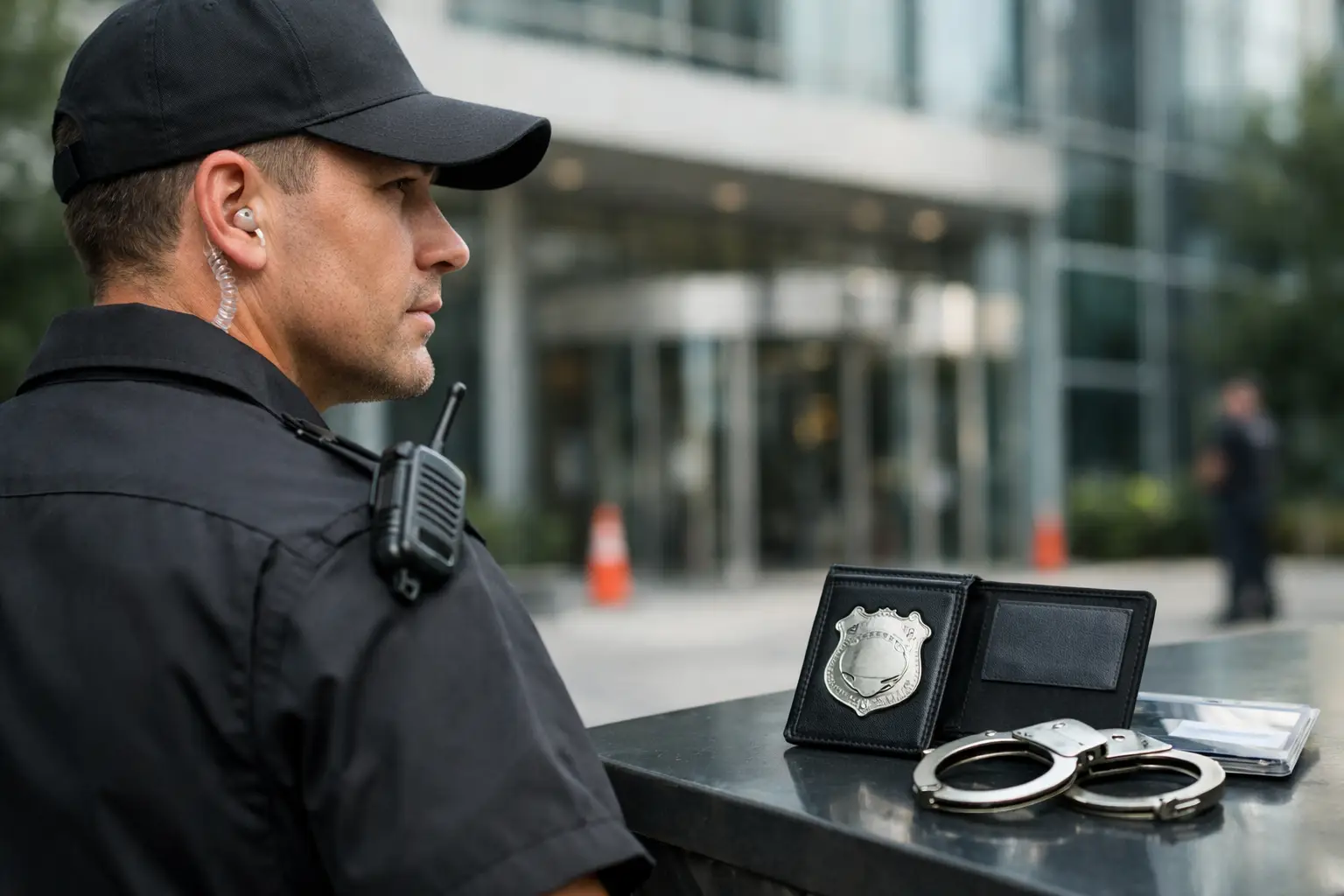
A security job can be a quick route into steady, frontline work, but employers cannot put you on a licenced assignment simply because you have completed a course. This security guarding licence requirements guide explains what you need to train, apply and become job-ready for work in Great Britain.
For most people starting out, the key decision is whether to qualify as a Security Guard or Door Supervisor. The right choice affects the jobs you can apply for, the training you complete and how flexible your career options will be.
Do you need an SIA licence for security work?
You need an SIA licence when your role involves licensable activity in the private security industry. This commonly includes guarding premises against unauthorised access, theft or damage; carrying out patrols; monitoring CCTV in public-space surveillance roles; and working as a door supervisor at licenced venues, events or other places where door supervision is required.
An SIA licence is personal to you. Your employer cannot lend you one, and completing training alone does not give you legal permission to work. You must hold the correct licence before carrying out the role.
Some roles and situations sit outside SIA licensing rules, particularly where duties are genuinely non-licensable. For example, a receptionist who only greets visitors is not automatically a security guard. However, if that person controls access, challenges unauthorised people or protects property as part of their role, a licence may be needed. If a job description is unclear, ask the employer what licenced activity you will be expected to perform.
Security guarding licence requirements: the essentials
To apply for an SIA licence, you normally need to be at least 18, complete the required qualification for the licence you want, prove your identity and pass the SIA’s checks. You must also have the legal right to work in the UK.
The SIA carries out identity and criminality checks as part of the application process. A criminal record does not always mean an automatic refusal. Decisions can depend on the offence, when it happened, the sentence received and the role you are applying for. Be honest and accurate in your application. Trying to hide information is far more likely to cause a problem than explaining it properly.
You will need documents that support your identity and address history. If you have lived outside the UK in recent years, you may be asked for overseas criminal-record information as well. This can take time to obtain, so start early rather than waiting until your training has finished.
The licence application fee is paid directly as part of the SIA application and a licence generally lasts for three years. Fees and application processes can change, so check the current amount before you apply and factor it into your budget.
Choose the licence that matches your job goal
Security Guard licence
A Security Guard licence is suited to roles such as retail security officer, corporate security officer, concierge security, warehouse guard and static-site officer. The work often involves access control, patrols, incident reporting, customer service and protecting staff, visitors and property.
This is a strong route if you want site-based work and do not expect to work on licenced premises as a door supervisor. It is focused, practical and directly relevant to many entry-level security vacancies.
Door Supervisor licence
A Door Supervisor licence is the more flexible option for many new learners. It can lead to work at pubs, clubs, events, hotels, arenas, retail sites and corporate buildings. Crucially, a Door Supervisor licence also allows you to carry out Security Guard activities, whereas a Security Guard licence does not allow you to work as a door supervisor.
That flexibility can make door supervision a sensible choice if you want access to a wider range of shifts. The trade-off is that the work can be more demanding. You may deal with refusals of entry, conflict, intoxicated customers and late-night hours. Good communication, calm decision-making and professional boundaries matter as much as physical presence.
CCTV Operator licence
If your aim is to monitor cameras in control rooms, local authority settings, transport hubs or larger sites, you may need a Public Space Surveillance CCTV Operator licence. This is a separate route with its own qualification. Watching CCTV as an incidental part of another job is different from performing a dedicated public-space surveillance role, so check the exact duties before choosing a course.
Complete the right recognised qualification
Your training must match the licence you plan to apply for. A security course should give you more than exam preparation. You need to understand the law, your powers and limits, emergency procedures, incident reporting, equality and communication, as well as how to deal with conflict safely.
Door Supervisor training also includes practical physical-intervention learning. This is not about acting aggressively or trying to be a hero. It is about recognising warning signs, using communication first, making safe decisions and understanding when physical intervention is lawful, proportionate and necessary.
You will normally need a valid emergency first aid qualification before starting, or as part of meeting the course entry requirements, depending on the route and provider. First aid is relevant because security staff are often among the first people asked to respond when someone is injured, unwell or vulnerable.
Choose training that is recognised for SIA licence applications and gives you practical support. Experienced instructors can help you practise realistic scenarios, understand what exam questions are asking and build confidence for the workplace. At BrotherzGroup, learners can benefit from hands-on teaching, instant exam results and a free exam resit guarantee, helping them move towards work without unnecessary uncertainty.
Apply only after your qualification is ready
Once you have passed your course, your qualification must be available for the SIA to verify before your application can be fully processed. Instant exam results are useful, but they are not the same as having an active SIA licence. Do not accept a shift that requires a licence until your application has been granted.
Set up your SIA online account, select the correct licence type, complete every section carefully and pay the application fee. Make sure your name, date of birth and address details match your identity documents. Small errors can lead to delays.
Processing times vary. Your application may move quickly if your records and documents are straightforward, but identity queries, address history, overseas checks or criminality checks can add time. Apply as soon as you are eligible rather than waiting for a job offer to arrive.
Prepare for work while your application is processed
Use this period to get ready for interviews. Security employers want reliable people who can communicate clearly, write accurate reports, follow site instructions and stay professional under pressure. Your CV should state the qualification you have completed and that your SIA application is in progress, if that is the case.
Think about the work pattern you can genuinely take on. Door supervision and events may involve evenings, weekends and late finishes. Retail and corporate guarding can offer more regular shifts, but may require long periods on your feet. Pay rates vary by role, location, shift pattern, responsibilities and experience, so look beyond the headline hourly figure when comparing vacancies.
A first aid qualification can also strengthen your employability, while clear spoken and written English helps with handovers, incident logs and customer-facing duties. Security is not only about standing at a door or watching a screen. Employers need people they can trust with safety, information and the reputation of the site.
Keep your licence valid
An SIA licence is not a one-time achievement. You must renew it before it expires, and renewal requirements can include a top-up qualification for certain licence types. Do not leave renewal until the final weeks. If your licence expires, you cannot continue working in a role that requires it.
Keep your contact details up to date and take your professional standards seriously. Poor conduct, dishonesty or serious breaches of licensing conditions can affect your ability to work in the sector. The strongest long-term security careers are built on reliability, respect and a calm approach when situations become difficult.
Start with the licence that fits the jobs you want now, but choose with your next step in mind. The right training gives you a recognised route into work; your professionalism on every shift is what turns that opportunity into a career.
Leave a Reply