
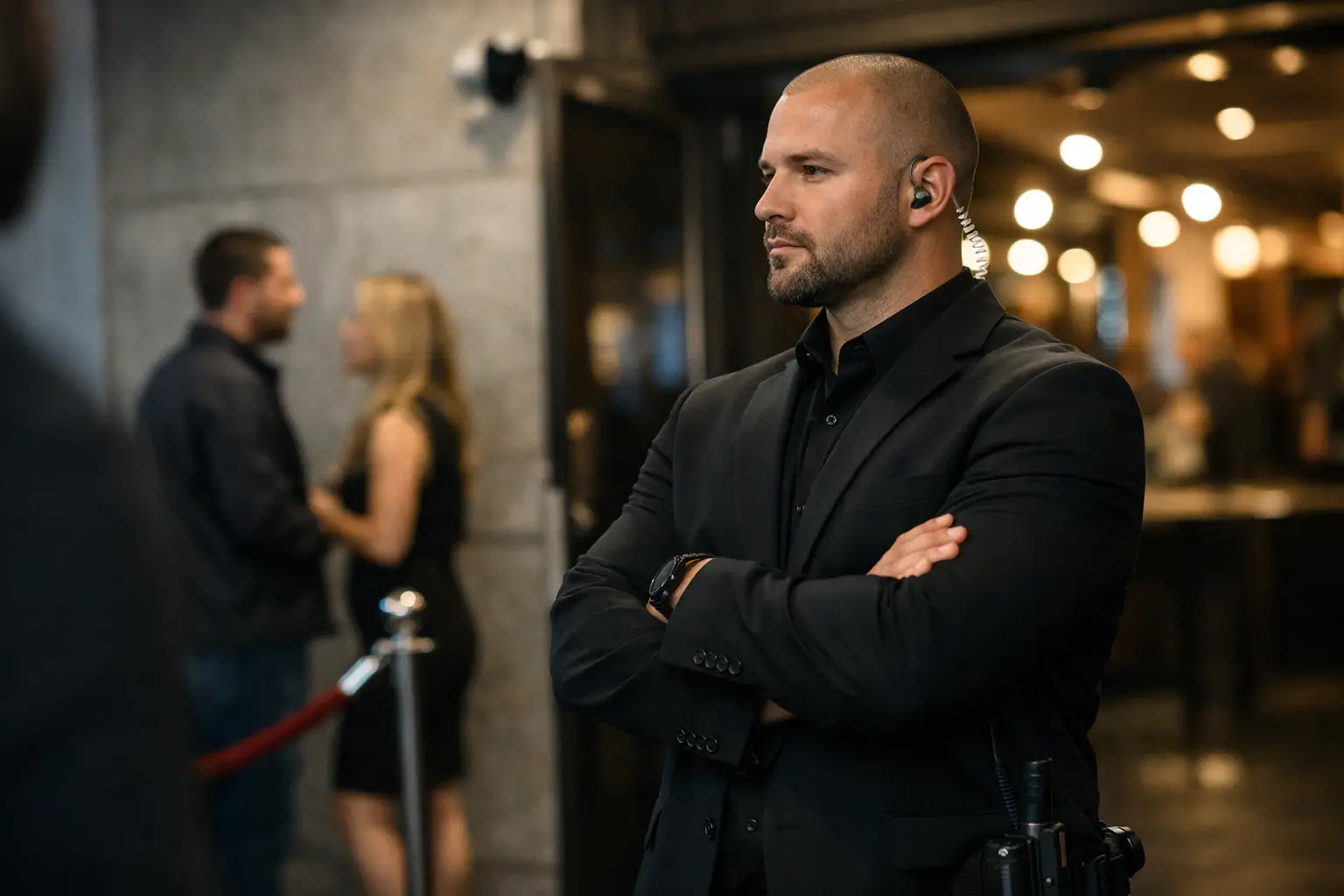
A busy Saturday night can change quickly. One person may be refused entry, a disagreement can build near the bar, or a customer may need urgent first aid. That is why door supervisor responsibilities explained is about far more than standing at an entrance. A good door supervisor protects people, spots risks early and helps a venue remain safe, welcoming and compliant.
For anyone considering an SIA-licensed role, understanding the day-to-day reality matters. Door supervision can lead to work in pubs, clubs, events, retail, hotels, corporate venues and entertainment sites. The role requires confidence, calm communication and the ability to make sensible decisions when pressure is high.
Door supervisor responsibilities explained: the core purpose
The main purpose of a door supervisor is to protect customers, staff and property while helping the premises operate safely. They are often the first person a customer meets and the last person they see, so their attitude can shape the whole experience of a venue.
This is a prevention-focused job. The best outcome is usually the one where an issue is noticed and resolved before it becomes a confrontation. That could mean speaking to someone who has had too much to drink, separating people after an argument, reporting a hazard or politely refusing entry where venue rules are not met.
Door supervisors are not police officers and do not gain special legal powers simply by wearing a uniform or displaying an SIA licence. They must act within the law, follow site procedures and use professional judgement at all times. Where physical intervention is genuinely necessary, it must be lawful, necessary and proportionate to the situation.
Managing entry and access
Access control is one of the most visible parts of door supervision. Depending on the venue, this may involve checking tickets, guest lists, membership, dress codes, proof of age or bags. The aim is not to make entry difficult. It is to make sure the right people enter safely and that venue conditions are followed fairly.
A door supervisor may refuse entry to someone who is intoxicated, aggressive, carrying a prohibited item or unable to meet the venue’s entry requirements. How this is handled matters. Clear, respectful communication can prevent embarrassment and reduce the chance of an argument.
Searches may also form part of the role, particularly at events, night-time venues and high-risk sites. A search should be carried out in line with the venue’s policy, with consent and with respect for the person involved. If a person refuses a voluntary search, they may be refused entry, but the response should remain calm and professional.
Age verification is another key responsibility in licensed premises. Door staff need to follow the venue’s challenge policy and check identification carefully. Letting an underage person into an age-restricted venue can create serious consequences for the business, its licence and its staff.
Keeping people safe inside and outside the venue
The job does not end once customers are through the door. Door supervisors often monitor public areas, exits, smoking areas, queue lines and nearby spaces where conflict may arise. They may work at a fixed position, patrol the venue or communicate with colleagues by radio.
A strong door supervisor stays alert to changes in behaviour. Raised voices, overcrowding, damaged glass, unsafe stairs, a blocked fire exit or someone who appears unwell can all require action. Small details matter because they can become bigger incidents if ignored.
Typical safety duties include:
- monitoring capacity and helping to prevent overcrowding
- keeping emergency exits and walkways clear
- responding to medical concerns and calling for help when needed
- supporting evacuation procedures during an emergency
- reporting hazards, damage and suspicious behaviour promptly
At larger sites, door supervisors may work alongside managers, bar staff, event stewards, CCTV operators, first aiders and the police. Knowing who to contact, and when, is a major part of working effectively.
Preventing and managing conflict
Conflict management is one of the most valuable skills in the role. Customers may be upset about being refused entry, asked to leave or challenged about their behaviour. A professional response can lower the temperature before a situation turns physical.
This usually starts with communication. Door supervisors should listen, speak clearly, avoid provocative language and give simple choices where possible. For example, asking someone to take a few minutes outside to calm down may be more effective than immediately escalating the situation.
There are times when a person must be removed from a venue or when colleagues need to intervene. In these cases, teamwork and safe positioning are essential. Physical intervention is never the first option and should only be used when it is justified and necessary. Your training should help you understand conflict management, personal safety, safe disengagement and post-incident procedures.
After an incident, the job is not finished. The person may need welfare support, the area may need to be made safe, and the event needs to be reported accurately. Good door supervisors remain composed after a difficult situation rather than allowing emotions to affect their judgement.
Writing reports that protect you and the venue
Accurate reporting is a less visible but essential duty. Incident reports can be needed by venue management, police, insurers, local authorities or licensing teams. They also protect the door supervisor by creating a clear record of what happened and what action was taken.
A useful report is factual, timely and specific. It should record relevant times, locations, people involved, what was seen or heard, action taken and any witnesses or CCTV references. It should not include assumptions, insults or exaggerated language.
For example, write what you observed: “The customer raised his voice and moved towards the bar staff member.” Avoid writing conclusions that cannot be proven, such as “The customer was looking for a fight.” Clear reports show professionalism and can be vital if an incident is reviewed later.
Customer service is part of the security role
Some people think door supervision is only about stopping trouble. In reality, customer service is a major part of the job. You may help someone find an exit, assist a vulnerable customer, explain a queue system or reassure a person who has been separated from their group.
Being polite does not mean being soft on rules. It means setting boundaries without creating unnecessary conflict. A firm but respectful approach helps legitimate customers feel safe and makes it easier for staff to ask for your support.
This balance can look different depending on the workplace. A nightclub role may involve active queue management and late-night conflict prevention, while a corporate reception role may focus more on visitor checks, professional presentation and access passes. Retail door supervision can involve loss prevention, customer reassurance and liaison with store management. The core responsibility stays the same: protect people and property without creating avoidable problems.
Working legally and professionally
To work as a door supervisor in licensable roles, you normally need the correct SIA licence. Getting there involves completing an approved qualification and meeting the SIA’s application requirements. Training gives you the foundation, but professional standards must continue on every shift.
That includes displaying your licence correctly when required, following assignment instructions, keeping information confidential and treating people fairly. Discrimination, aggressive behaviour, careless use of force or poor record-keeping can put both your job and licence at risk.
Appearance and reliability also matter. Turning up on time, wearing the required uniform, checking equipment and taking a proper handover show that you can be trusted with responsibility. Employers value people who can work as part of a team, communicate clearly and stay calm when plans change.
What makes someone job-ready?
The role suits people who are observant, dependable and comfortable speaking to different types of people. You do not need to be naturally confrontational. In fact, the strongest door supervisors often avoid confrontation through awareness, communication and sound judgement.
Practical training is where these skills begin to make sense. Learning from experienced instructors, practising realistic scenarios and understanding why procedures exist can build the confidence employers look for. At BrotherzGroup, the focus is on helping learners gain recognised, job-ready security qualifications with practical support from trainers who understand frontline work.
A door supervisor carries real responsibility from the moment they start a shift. If you approach the role with respect, discipline and a genuine focus on safety, you can build a trusted reputation that opens doors across the security industry.
Leave a Reply