
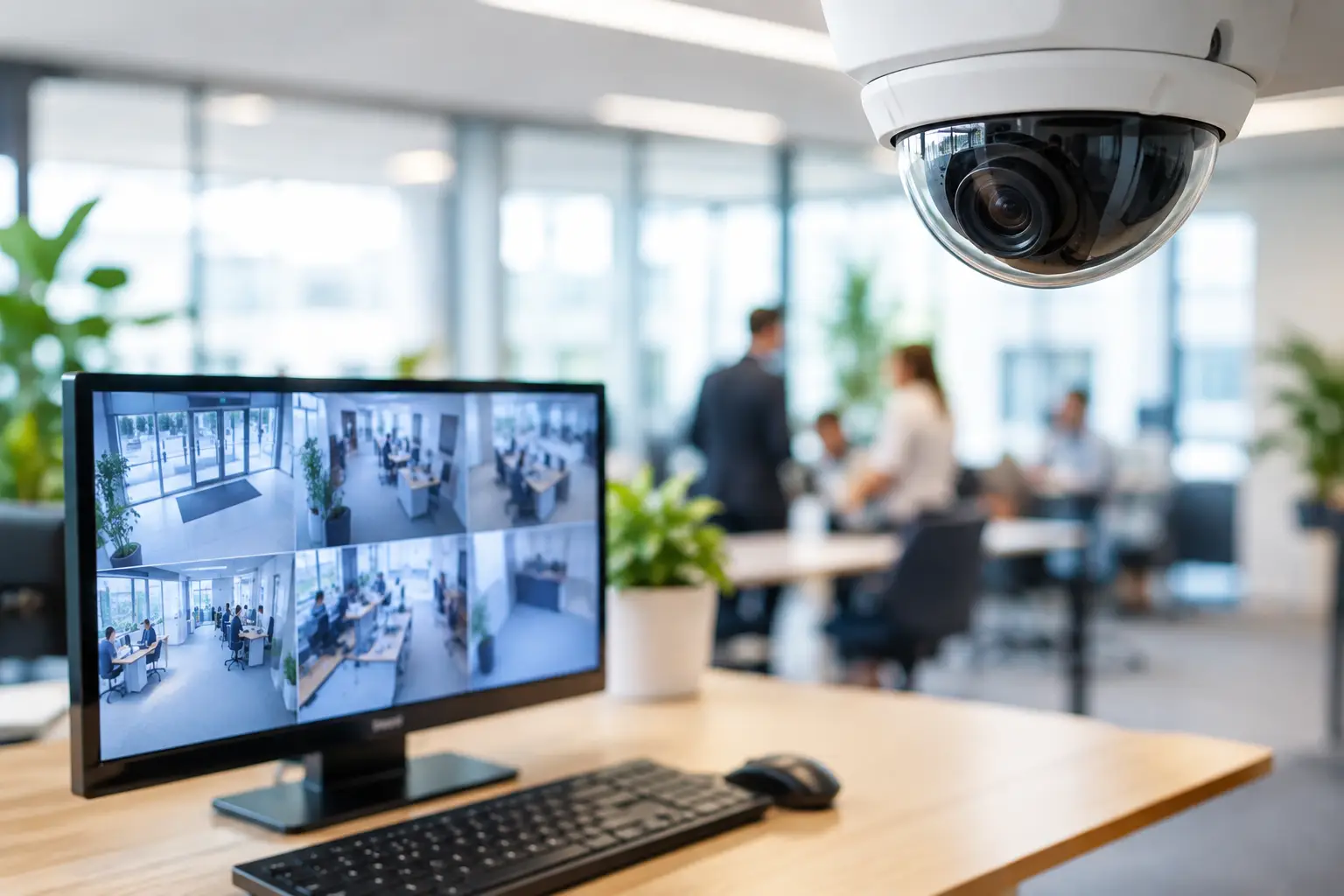
A CCTV control room can make the difference between spotting a risk early and reacting after an incident. But cameras do not give an operator unlimited permission to watch, record or share what they see. Knowing how to operate CCTV legally is a core part of doing the job professionally – and protecting the public, your employer and your own career.
For security professionals, legal operation is not just about passing an assessment. It shapes every decision: where you direct a camera, what you write in an incident log, who can view footage and when you escalate a concern. The strongest CCTV operators combine alert observation with sound judgement.
When do you need an SIA CCTV licence?
If you are carrying out public space surveillance using CCTV as part of contracted security work, you will generally need an SIA Public Space Surveillance licence. This is the frontline licence commonly referred to as the CCTV operator licence.
The role may involve monitoring cameras in town centres, shopping areas, transport locations, venues, housing sites or private businesses open to the public. You may be watching live images, identifying suspicious activity, communicating with colleagues on the ground and assisting with evidence after an incident.
There are exemptions and role-specific details, so do not assume that working near a camera system automatically makes you licensable, or that an in-house role never requires a licence. Your employer should confirm the requirements of the role. If your duties include using CCTV to protect people or property, check the licensing position before you start work.
To apply for an SIA CCTV licence, you need an accepted qualification, such as the Level 2 Award for Working as a CCTV Operator within the Private Security Industry, as well as meeting the SIA’s identity and criminal record checking requirements. A recognised course gives you practical grounding in control-room procedures, communications, evidence handling and the law behind the role.
How to operate CCTV legally: the rules behind the screen
Most workplace CCTV systems process personal data. A person can be identified by their face, clothing, vehicle registration, location or the events connected to them. That means the organisation running the cameras must follow the UK GDPR and the Data Protection Act 2018.
Usually, the organisation that decides why cameras are used and how footage is handled is the data controller. As an operator, you may not set the policy, but you are responsible for following it accurately. A careless action at the monitor can still create a privacy breach.
Monitor only for a legitimate security purpose
CCTV should be used for a clear purpose, such as preventing crime, protecting staff, investigating incidents or managing safety risks. Operators should use the system only for authorised work.
That means no zooming in on people out of curiosity, no following someone around the site without a reason and no using cameras to settle personal disagreements. A professional operator watches what is relevant to the task, records facts and avoids assumptions.
For example, if a customer is behaving aggressively towards staff, tracking their movements and informing security may be justified. Monitoring a colleague because you are curious about who they are meeting is not.
Look for clear signage and follow the site policy
People should normally be told that CCTV is in use. Signs should be visible before they enter the monitored area and should identify the organisation responsible for the cameras, along with a way to obtain further information.
The employer or site manager is usually responsible for putting signs in place, but operators should raise concerns if signage is missing, damaged or misleading. You should also know the site’s CCTV policy: which areas are covered, why cameras are there, who can access images and how long recordings are kept.
Cameras in highly private places, such as toilets, changing rooms or prayer areas, are unlikely to be lawful except in truly exceptional circumstances with very strong safeguards. If you are asked to monitor a location that feels intrusive or outside the stated purpose, report it to your supervisor rather than making your own judgement call.
Be especially careful with audio and staff monitoring
Audio recording can be much more intrusive than video. It should not be switched on simply because the system has that feature. The organisation needs a strong reason, clear controls and a lawful approach to using recorded conversations.
Staff monitoring also needs care. Employers may use CCTV to prevent theft, investigate a specific concern or keep a workplace safe, but constant monitoring without a fair reason can be excessive. As an operator, stick to the assignment and avoid discussing staff movements or behaviour outside the proper reporting process.
Handle live incidents without overstepping your role
A good operator does not only watch screens. They assess, communicate and preserve useful information. However, CCTV control rooms work best when everyone understands their limits.
If you see a possible theft, assault, trespass or safety incident, follow the agreed escalation procedure. This may mean alerting a supervisor, sending a security officer to the area, contacting the police through the correct channel or calling emergency services where there is an immediate threat to life.
Your incident log should be factual. Record the time, camera number or location, a clear description of what happened, actions taken and who was informed. Avoid statements such as “the suspect was definitely stealing” when you only saw someone place an item in a bag. Write what you observed: “Individual placed an item in a black backpack and left the shop without approaching the till area.”
This distinction matters. CCTV footage and operator notes may later be reviewed by managers, police, insurers or a court. Accurate records support an investigation; opinions and exaggeration can damage it.
Keep footage secure and share it only with authorised people
Footage is not entertainment, gossip material or social media content. Viewing, copying, downloading or sharing recordings must happen only through an authorised process.
In practice, this means using your own login, keeping passwords confidential and never leaving a control room or workstation open for someone else to access. Do not use a personal phone to photograph a monitor. Do not send clips through personal messaging apps. Do not show recordings to colleagues, friends or members of the public because they ask.
When police request footage, follow the organisation’s procedure. The request may need to be logged, approved and supplied in a secure format. Preserve the original recording where possible and record who received a copy, when it was released and the reason for disclosure. This creates an audit trail and helps show that evidence has not been altered.
People can also ask for CCTV images of themselves through a subject access request. These requests should be passed to the person or team responsible for data protection. Do not decide on your own whether to release footage. Images may contain other people, and the organisation may need to redact or consider exemptions before responding.
Retention, deletion and evidence preservation
CCTV footage should not be kept forever “just in case”. The organisation should have a retention period that reflects why the system is used. Many systems overwrite footage automatically after a set period, unless an incident means it needs to be saved.
As an operator, learn how the system stores recordings and how quickly material may be overwritten. If an incident occurs, preserve the relevant footage promptly and tell the appropriate manager. Waiting until the end of a shift can mean the evidence is lost, especially on busy systems with limited storage.
Only save what is needed. If an incident happened between 14:05 and 14:15, you may need a short period before and after that time to provide context, but not a full day’s recordings from every camera. Proportionate handling protects privacy and makes investigations easier to manage.
CCTV in homes and smaller businesses
The same principles matter outside major control rooms. A homeowner using a camera solely within their own property may fall within the domestic purposes exemption. However, if the camera captures a neighbour’s garden, shared accessway or public pavement, data protection duties can apply.
For small businesses, visible signs, a clear purpose, restricted access and secure storage are sensible starting points. If staff or customers are recorded, the business should be able to explain why the cameras are necessary and how footage is protected.
Build the habits employers look for
Employers need CCTV operators who are calm under pressure, confident with systems and trusted with sensitive information. The legal side of the role is part of that trust. It shows you can protect evidence without compromising privacy, communicate professionally and follow procedures when an incident develops quickly.
Practical training helps turn these rules into habits. You should be comfortable identifying suspicious behaviour without profiling people, writing usable incident reports, using radios clearly and knowing when to escalate rather than act alone. These are job-ready skills, not box-ticking exercises.
If you are preparing for a CCTV operator role in Southall, Slough or elsewhere in Great Britain, focus on the standard employers expect: an accepted qualification, a valid SIA licence where required, and the confidence to work lawfully every shift. The camera may record the incident, but your judgement determines whether the response stands up to scrutiny.
Leave a Reply